
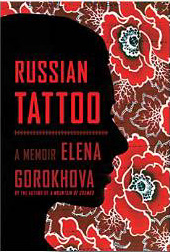
 There is no need for me to review Russian Tattoo because everyone else has. Just check Elena Gorokhova’s author page www.elenagorokhova.com Even legendary actors Alan Alda and F. Murray Abraham marched on her behalf.
I have my own passionate response to Russian Tattoo -- a potential blog title: “What color is my envy?” You see, envy can be white or black in Russian. So definitely “white” envy, the good kind. However, I covet her publicity, her publishing house and her fame. She also has a nice cover designer but so did we. Envy aside, our book was meant to inform and help our readers feel what it was like to grow up Jewish in the last half of the twentieth century in the USSR, and to follow the unusual choices of two very gutsy heroines – Vera and Alla. So Alan and F. Murray and all you Russo/bibliophiles, get your...
There is no need for me to review Russian Tattoo because everyone else has. Just check Elena Gorokhova’s author page www.elenagorokhova.com Even legendary actors Alan Alda and F. Murray Abraham marched on her behalf.
I have my own passionate response to Russian Tattoo -- a potential blog title: “What color is my envy?” You see, envy can be white or black in Russian. So definitely “white” envy, the good kind. However, I covet her publicity, her publishing house and her fame. She also has a nice cover designer but so did we. Envy aside, our book was meant to inform and help our readers feel what it was like to grow up Jewish in the last half of the twentieth century in the USSR, and to follow the unusual choices of two very gutsy heroines – Vera and Alla. So Alan and F. Murray and all you Russo/bibliophiles, get your... 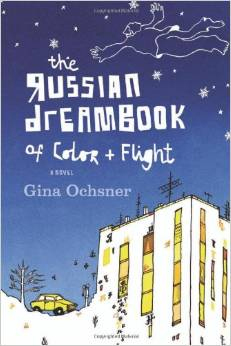 The Russian Dreambook of Colour and Flight
This beautifully titled book is not for everyone, but it speaks to me. My day to day life may not be exciting, but at night I travel to other continents. My one complaint is that about once a month, I find myself just finishing a lovely trip in my dreams to some new, exotic place only to remember that I have a ticket for China and I’m neither packed, prepared, nor pleased. Perhaps because after visiting China in summer of 1982 when skies were blue, shirts were blue and cars were few, I’ve had my fill of that experience. I must say that our watchers in China were far more gracious and useful frequently returning lost objects to me, like my camera, compared to the Soviet followers lurking in the shadows who may have awaited my droppings for personal re-sale.
“…as a girl, she’d...
The Russian Dreambook of Colour and Flight
This beautifully titled book is not for everyone, but it speaks to me. My day to day life may not be exciting, but at night I travel to other continents. My one complaint is that about once a month, I find myself just finishing a lovely trip in my dreams to some new, exotic place only to remember that I have a ticket for China and I’m neither packed, prepared, nor pleased. Perhaps because after visiting China in summer of 1982 when skies were blue, shirts were blue and cars were few, I’ve had my fill of that experience. I must say that our watchers in China were far more gracious and useful frequently returning lost objects to me, like my camera, compared to the Soviet followers lurking in the shadows who may have awaited my droppings for personal re-sale.
“…as a girl, she’d... 
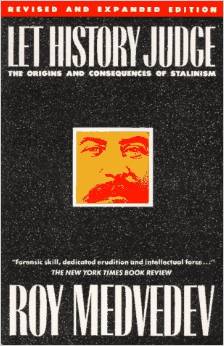 Medvedev deserves a shout out just for endurance. He was born in 1925 and survived even with the epithet of “dissident historian.” His father was not so fortunate and was caught up in Stalin’s purges of the 1930s. Medvedev was born in Georgia, but is not a Georgian. He is Jewish and his father was a professor in Tbilisi when ROy was born. Medvedev is the consummate outsider;yet, he attended Leningrad State University.
The Medvedev book we consulted for Jewish Luck was Let History Judge, a book published in 1969 that earned Medvedev expulsion from the Communist Party. In Russian the book is entitled, К суду истории, which translates as Before the Court of History. We also consulted an interview of Medvedev in 1977 on dissidents. His definition aligned well with the feelings of Alisa and Vera that they were not dissidents even though they felt imprisoned and spoke to each...
Medvedev deserves a shout out just for endurance. He was born in 1925 and survived even with the epithet of “dissident historian.” His father was not so fortunate and was caught up in Stalin’s purges of the 1930s. Medvedev was born in Georgia, but is not a Georgian. He is Jewish and his father was a professor in Tbilisi when ROy was born. Medvedev is the consummate outsider;yet, he attended Leningrad State University.
The Medvedev book we consulted for Jewish Luck was Let History Judge, a book published in 1969 that earned Medvedev expulsion from the Communist Party. In Russian the book is entitled, К суду истории, which translates as Before the Court of History. We also consulted an interview of Medvedev in 1977 on dissidents. His definition aligned well with the feelings of Alisa and Vera that they were not dissidents even though they felt imprisoned and spoke to each... 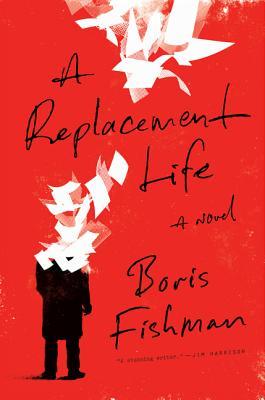 Featuring: A Replacement Life by Boris Fishman (NY: Harper, 2014)* and Lena Finkle’s Magic Barrel – A Graphic Novel by Anya Ulinich (NY: Penguin, 2014).
If you want to read an authoritative high-brow book review on either of these books, hop to the New York Times Book Review where both books are highly touted. If you want to read a Midwesterner's account of how I connect to these books and how it relates to our book, Jewish Luck, keep reading.
These novels have something in common besides being extremely funny, well written, and, no doubt, somewhat autobiographical. Both are written by Soviet émigrés who came to the US at a young age. Boris Fishman arrived in New York City at age 9 from Minsk; however, his neighborhood in Brooklyn might better be named New Minsk. Anya Ulinich immigrated from Moscow to Arizona at age 17.
What better topic for these Americanized emigrés...
Featuring: A Replacement Life by Boris Fishman (NY: Harper, 2014)* and Lena Finkle’s Magic Barrel – A Graphic Novel by Anya Ulinich (NY: Penguin, 2014).
If you want to read an authoritative high-brow book review on either of these books, hop to the New York Times Book Review where both books are highly touted. If you want to read a Midwesterner's account of how I connect to these books and how it relates to our book, Jewish Luck, keep reading.
These novels have something in common besides being extremely funny, well written, and, no doubt, somewhat autobiographical. Both are written by Soviet émigrés who came to the US at a young age. Boris Fishman arrived in New York City at age 9 from Minsk; however, his neighborhood in Brooklyn might better be named New Minsk. Anya Ulinich immigrated from Moscow to Arizona at age 17.
What better topic for these Americanized emigrés... 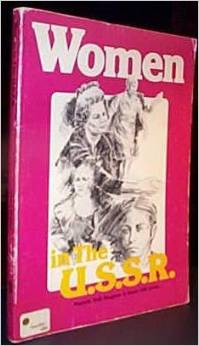 First the disclaimers. I know and admire both authors. I used materials Marjorie and Susan developed since the 1980s to great acclaim from my students. Not only are the materials well done, Marjorie and Susan are expert in helping a teacher navigate and make best use of unfamiliar new material.
For my first foray into the history of the USSR, I found a copy of Women of the USSR in the high school book storage room. I dusted it off, sank back in my desk chair to skim, and was enthralled by the material. I knew my students would be captivated.
Each unit includes brief chapters that highlight women’s issues with relevant primary material that Marjorie and Susan contextualize. The units also include discussion questions to guide students through the material. In the Women of the USSR, Bingham and Gross include a chart that compares and contrasts the status of women...
First the disclaimers. I know and admire both authors. I used materials Marjorie and Susan developed since the 1980s to great acclaim from my students. Not only are the materials well done, Marjorie and Susan are expert in helping a teacher navigate and make best use of unfamiliar new material.
For my first foray into the history of the USSR, I found a copy of Women of the USSR in the high school book storage room. I dusted it off, sank back in my desk chair to skim, and was enthralled by the material. I knew my students would be captivated.
Each unit includes brief chapters that highlight women’s issues with relevant primary material that Marjorie and Susan contextualize. The units also include discussion questions to guide students through the material. In the Women of the USSR, Bingham and Gross include a chart that compares and contrasts the status of women...