

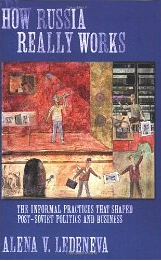
 Alena Ledeneva is an intrepid Russian-born professor now teaching in Great Britain, who conducted in-depth interviews with 50 respondents between 1997 and 2003 to understand the “rulebook” of the post-Soviet Russian economy as it is actually played out. How Russia Really Works is a fascinating account of the problems of modernization from a failed centralized “planned economy” in which no one, except the power elite, was invested, to a market economy for many who would find the terms “business ethics” or “business law” oxymoronic. However, the problems predated the Soviet state.
Ledeneva cites Sergei Witte, the progressive prime minister who served at the end of the nineteenth century, “’I am not in the least afraid of foreign capital, since I consider it is in the interests of our country…What I am afraid of is just the opposite, that our way of doing things has such specific characteristics, so different from the...
Alena Ledeneva is an intrepid Russian-born professor now teaching in Great Britain, who conducted in-depth interviews with 50 respondents between 1997 and 2003 to understand the “rulebook” of the post-Soviet Russian economy as it is actually played out. How Russia Really Works is a fascinating account of the problems of modernization from a failed centralized “planned economy” in which no one, except the power elite, was invested, to a market economy for many who would find the terms “business ethics” or “business law” oxymoronic. However, the problems predated the Soviet state.
Ledeneva cites Sergei Witte, the progressive prime minister who served at the end of the nineteenth century, “’I am not in the least afraid of foreign capital, since I consider it is in the interests of our country…What I am afraid of is just the opposite, that our way of doing things has such specific characteristics, so different from the... 
 Sholom Aleichem (Solomon Naumovich Rabinovich) 1859-1916
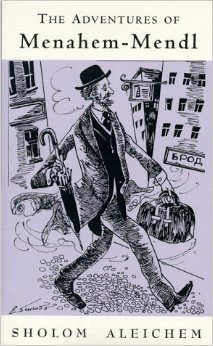
In February we feature the well-known writer whose stories about MenakhemMendel were the basis for the Soviet film, Jewish Luck. This film along with Vera’s use of the term “Jewish luck” prompted us to also title our book, Jewish Luck. Mosfilm changed Sholom Aleichem’s storyline to conform to Soviet propaganda, but it’s clear why Marxist ideologues thought a Sholom Aleichem story would draw the Jewish population to the theater. He was popular and he was funny. You may have heard him called the “Jewish Mark Twain.” When Mark Twain heard the comparison, in response, he styled himself, “the American Sholom Aleichem.”
Sholom Aleichem’s economic circumstances were tenuous. At times, his family was relatively prosperous, at other times, they lost everything. Illness stalked the family and following the pogroms of 1905, he left for the United States along with millions of other Russian Jews. Sholom Aleichem...
Sholom Aleichem (Solomon Naumovich Rabinovich) 1859-1916
In February we feature the well-known writer whose stories about MenakhemMendel were the basis for the Soviet film, Jewish Luck. This film along with Vera’s use of the term “Jewish luck” prompted us to also title our book, Jewish Luck. Mosfilm changed Sholom Aleichem’s storyline to conform to Soviet propaganda, but it’s clear why Marxist ideologues thought a Sholom Aleichem story would draw the Jewish population to the theater. He was popular and he was funny. You may have heard him called the “Jewish Mark Twain.” When Mark Twain heard the comparison, in response, he styled himself, “the American Sholom Aleichem.”
Sholom Aleichem’s economic circumstances were tenuous. At times, his family was relatively prosperous, at other times, they lost everything. Illness stalked the family and following the pogroms of 1905, he left for the United States along with millions of other Russian Jews. Sholom Aleichem... 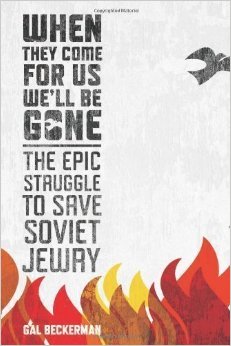 FEATURED BOOK FOR JANUARY:
Why you might be interested: Gal Beckerman frames the story of the Soviet Jewry movement as a redemption story. We don’t all know that story as well as we think we do. If you remember “Save Soviet Jewry” billboards, prisoner of conscience bracelets, and twinning with a thirteen year-old-Russian for your Bar or Bat Mitzvah, you lived during the struggle but may not understand what happened behind the scenes. Alisa and Vera claim that most Americans and Europeans are not very well-informed on the dissident movement and believed everything they read in the American papers. They have their view and they would approve of Gal Beckerman’s well-researched and compelling history of the movement.
Just as Beckerman discovered in his research, we found that the paradox of the USSR not allowing Soviet Jews to completely assimilate and also not allowing them to express a positive Jewish identity pushed many Soviet Jews to assert...
FEATURED BOOK FOR JANUARY:
Why you might be interested: Gal Beckerman frames the story of the Soviet Jewry movement as a redemption story. We don’t all know that story as well as we think we do. If you remember “Save Soviet Jewry” billboards, prisoner of conscience bracelets, and twinning with a thirteen year-old-Russian for your Bar or Bat Mitzvah, you lived during the struggle but may not understand what happened behind the scenes. Alisa and Vera claim that most Americans and Europeans are not very well-informed on the dissident movement and believed everything they read in the American papers. They have their view and they would approve of Gal Beckerman’s well-researched and compelling history of the movement.
Just as Beckerman discovered in his research, we found that the paradox of the USSR not allowing Soviet Jews to completely assimilate and also not allowing them to express a positive Jewish identity pushed many Soviet Jews to assert...  FEATURED BOOK FOR DECEMBER:
In November we wrote about a nonfiction work that directed our feet in St. Petersburg.
This month we’re highlighting a novel that treads on some of the same territory we reference in our book—the hunt for one’s place when displaced. The setting is the US and not Europe or the Caribbean. What Happened to Anna K by Irina Reyn follows a young Russian woman in New York City whose life parallels another Anna K—Anna Karenina.
I read this after Leslie and I completed our manuscript. I found that not only did the novel parallel Anna Karenina, but we wrote some passages about the lives of our Vera and Alisa that were remarkably similar to Reyn’s Anna. Perhaps, to paraphrase Tolstoy, all Russian mafia are the same. The author permits the reader both an insider and outsider view of a Soviet emigrant and captivates the imagination through Anna’s dreams.
For more information about this...
FEATURED BOOK FOR DECEMBER:
In November we wrote about a nonfiction work that directed our feet in St. Petersburg.
This month we’re highlighting a novel that treads on some of the same territory we reference in our book—the hunt for one’s place when displaced. The setting is the US and not Europe or the Caribbean. What Happened to Anna K by Irina Reyn follows a young Russian woman in New York City whose life parallels another Anna K—Anna Karenina.
I read this after Leslie and I completed our manuscript. I found that not only did the novel parallel Anna Karenina, but we wrote some passages about the lives of our Vera and Alisa that were remarkably similar to Reyn’s Anna. Perhaps, to paraphrase Tolstoy, all Russian mafia are the same. The author permits the reader both an insider and outsider view of a Soviet emigrant and captivates the imagination through Anna’s dreams.
For more information about this...