
Every so often, a series of discrete events seems to coalesce. This week is no exception. I have been thinking of the upcoming holiday of Simhat Torah and remembering how much it meant to Alla to be able to be part of such a boisterous Jewish celebration. The dancing and singing proclaimed, Am Yisrael hai, The People of Israel live! I appreciate how Alla drew Vera into the holiday and how she defied the fears that beset others and determined to find a way to be part of the celebration. Today in the US, there are no barriers to American Jews participating in Simhat Torah. Yet, how many people will appear in our synagogue on Friday morning? Simhat Torah also reminds me of the role that liquor and drinking ashot or two plays in the celebration. In our synagogue, there has been a group of men who keep a bottle of schnapps and glasses...
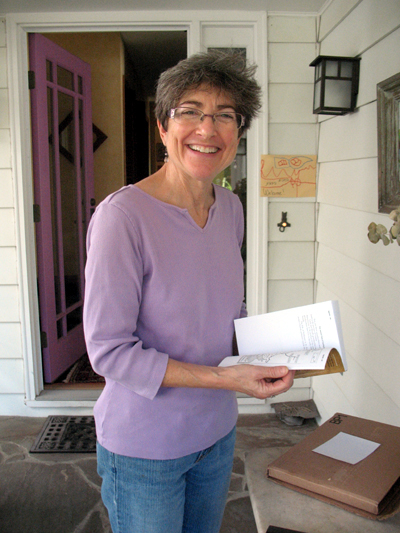 When I look at the photo of myself opening the box of the first editions of Jewish Luck: A True Story of Friendship, Deception and Risky Business, I remember the feeling of complete and total joy. The book was finished, the cover looked good, it was real. As a realist, I assumed the joy would diminish as the calendar progressed from Oct. 2013 to Nov. to Dec. While it’s true that the initial euphoria has dissipated, I feel so energized every time a reader talks to me about a topic raised in the book. We have had the privilege of speaking to numerous book groups and I thank each and every one of them for inviting us and sharing their impressions. Writing is a solo (or in our case a dual) activity. We are not just writing for ourselves, for Vera and Alla, and for their families, but also for all the people who open the cover and are looking for a story...
 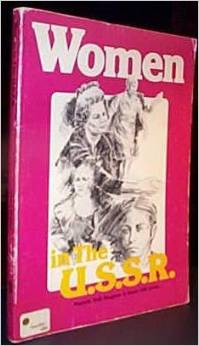 First the disclaimers. I know and admire both authors. I used materials Marjorie and Susan developed since the 1980s to great acclaim from my students. Not only are the materials well done, Marjorie and Susan are expert in helping a teacher navigate and make best use of unfamiliar new material.
For my first foray into the history of the USSR, I found a copy of Women of the USSR in the high school book storage room. I dusted it off, sank back in my desk chair to skim, and was enthralled by the material. I knew my students would be captivated.
Each unit includes brief chapters that highlight women’s issues with relevant primary material that Marjorie and Susan contextualize. The units also include discussion questions to guide students through the material. In the Women of the USSR, Bingham and Gross include a chart that compares and contrasts the status of women...
First the disclaimers. I know and admire both authors. I used materials Marjorie and Susan developed since the 1980s to great acclaim from my students. Not only are the materials well done, Marjorie and Susan are expert in helping a teacher navigate and make best use of unfamiliar new material.
For my first foray into the history of the USSR, I found a copy of Women of the USSR in the high school book storage room. I dusted it off, sank back in my desk chair to skim, and was enthralled by the material. I knew my students would be captivated.
Each unit includes brief chapters that highlight women’s issues with relevant primary material that Marjorie and Susan contextualize. The units also include discussion questions to guide students through the material. In the Women of the USSR, Bingham and Gross include a chart that compares and contrasts the status of women...  Simon Sebag Montefiore (b. 1965) doesn’t need us to trumpet his achievements, but in case you haven’t read all his books, I thought I’d mention this versatile author who has written both history and fiction. The common thread among his books is Russia. (except for the book, Jerusalem, which I intend to read before my next trip to Israel in November).
I read The Court of the Red Tsar for an International Baccalaureate Teacher’s Seminar over a decade ago. All of us history teachers were fascinated by his extensive research. It seemed like once the archives in Russia opened in 1994, Montefiore hopped on the first flight to the FSU ready to take notes. The Court of the Red Tsar dazzles history teachers-and anyone else who reads it- with new details about Stalin’s rule and his control over his ministers. His prose flows and most of us IB History teachers decided...
Simon Sebag Montefiore (b. 1965) doesn’t need us to trumpet his achievements, but in case you haven’t read all his books, I thought I’d mention this versatile author who has written both history and fiction. The common thread among his books is Russia. (except for the book, Jerusalem, which I intend to read before my next trip to Israel in November).
I read The Court of the Red Tsar for an International Baccalaureate Teacher’s Seminar over a decade ago. All of us history teachers were fascinated by his extensive research. It seemed like once the archives in Russia opened in 1994, Montefiore hopped on the first flight to the FSU ready to take notes. The Court of the Red Tsar dazzles history teachers-and anyone else who reads it- with new details about Stalin’s rule and his control over his ministers. His prose flows and most of us IB History teachers decided...  In Book Club in a Box's interview of Jewish Luck co-authors Leslie Levine Adler and Meryll Levine Page, some intriguing questions are posed like, "What made you decide this story should be turned into a book? What was the writing process like, and how did it affect your relationship with each other? What was the biggest obstacle for these two women in Russia in the 1970s? And in the current day, what would you say are the biggest obstacles for women in Russia now?" And more.... Read the full interview in the Book Club in a Box website.
 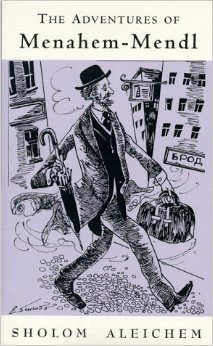 Sholom Aleichem (Solomon Naumovich Rabinovich) 1859-1916
In February we feature the well-known writer whose stories about MenakhemMendel were the basis for the Soviet film, Jewish Luck. This film along with Vera’s use of the term “Jewish luck” prompted us to also title our book, Jewish Luck. Mosfilm changed Sholom Aleichem’s storyline to conform to Soviet propaganda, but it’s clear why Marxist ideologues thought a Sholom Aleichem story would draw the Jewish population to the theater. He was popular and he was funny. You may have heard him called the “Jewish Mark Twain.” When Mark Twain heard the comparison, in response, he styled himself, “the American Sholom Aleichem.”
Sholom Aleichem’s economic circumstances were tenuous. At times, his family was relatively prosperous, at other times, they lost everything. Illness stalked the family and following the pogroms of 1905, he left for the United States along with millions of other Russian Jews. Sholom Aleichem...
Sholom Aleichem (Solomon Naumovich Rabinovich) 1859-1916
In February we feature the well-known writer whose stories about MenakhemMendel were the basis for the Soviet film, Jewish Luck. This film along with Vera’s use of the term “Jewish luck” prompted us to also title our book, Jewish Luck. Mosfilm changed Sholom Aleichem’s storyline to conform to Soviet propaganda, but it’s clear why Marxist ideologues thought a Sholom Aleichem story would draw the Jewish population to the theater. He was popular and he was funny. You may have heard him called the “Jewish Mark Twain.” When Mark Twain heard the comparison, in response, he styled himself, “the American Sholom Aleichem.”
Sholom Aleichem’s economic circumstances were tenuous. At times, his family was relatively prosperous, at other times, they lost everything. Illness stalked the family and following the pogroms of 1905, he left for the United States along with millions of other Russian Jews. Sholom Aleichem...  Advice to aspiring writers who are considering self-publishing: Self-publishing is relatively straightforward, but marketing is the major hurdle.
Leslie and I have rejoiced over the comments of our friends, acquaintances, and strangers who have read Jewish Luck and written reviews or notes to us. We aspired to write the book to appeal across cultures and age groups and from our unscientific survey, we’re succeeding. But how do we storm the shelves of local bookstores?
Bookstore managers are an embattled breed. They are trying to fight the aptly named Amazon. A new book with a weird title by unknown authors? “No, thank-you” or “We’ll think about it and get back to you” are their responses. And now out of the pack emerges one resounding “yes!” Thanks to Magers & Quinn of Minneapolis for taking a risk.
For those of you unfamiliar with this bookstore that sounds like an English marmalade, it is located in uptown Minneapolis at...
Advice to aspiring writers who are considering self-publishing: Self-publishing is relatively straightforward, but marketing is the major hurdle.
Leslie and I have rejoiced over the comments of our friends, acquaintances, and strangers who have read Jewish Luck and written reviews or notes to us. We aspired to write the book to appeal across cultures and age groups and from our unscientific survey, we’re succeeding. But how do we storm the shelves of local bookstores?
Bookstore managers are an embattled breed. They are trying to fight the aptly named Amazon. A new book with a weird title by unknown authors? “No, thank-you” or “We’ll think about it and get back to you” are their responses. And now out of the pack emerges one resounding “yes!” Thanks to Magers & Quinn of Minneapolis for taking a risk.
For those of you unfamiliar with this bookstore that sounds like an English marmalade, it is located in uptown Minneapolis at...  FEATURED BOOK FOR JANUARY:
Why you might be interested: Gal Beckerman frames the story of the Soviet Jewry movement as a redemption story. We don’t all know that story as well as we think we do. If you remember “Save Soviet Jewry” billboards, prisoner of conscience bracelets, and twinning with a thirteen year-old-Russian for your Bar or Bat Mitzvah, you lived during the struggle but may not understand what happened behind the scenes. Alisa and Vera claim that most Americans and Europeans are not very well-informed on the dissident movement and believed everything they read in the American papers. They have their view and they would approve of Gal Beckerman’s well-researched and compelling history of the movement.
Just as Beckerman discovered in his research, we found that the paradox of the USSR not allowing Soviet Jews to completely assimilate and also not allowing them to express a positive Jewish identity pushed many Soviet Jews to assert...
FEATURED BOOK FOR JANUARY:
Why you might be interested: Gal Beckerman frames the story of the Soviet Jewry movement as a redemption story. We don’t all know that story as well as we think we do. If you remember “Save Soviet Jewry” billboards, prisoner of conscience bracelets, and twinning with a thirteen year-old-Russian for your Bar or Bat Mitzvah, you lived during the struggle but may not understand what happened behind the scenes. Alisa and Vera claim that most Americans and Europeans are not very well-informed on the dissident movement and believed everything they read in the American papers. They have their view and they would approve of Gal Beckerman’s well-researched and compelling history of the movement.
Just as Beckerman discovered in his research, we found that the paradox of the USSR not allowing Soviet Jews to completely assimilate and also not allowing them to express a positive Jewish identity pushed many Soviet Jews to assert...  FEATURED BOOK FOR DECEMBER:
In November we wrote about a nonfiction work that directed our feet in St. Petersburg.
This month we’re highlighting a novel that treads on some of the same territory we reference in our book—the hunt for one’s place when displaced. The setting is the US and not Europe or the Caribbean. What Happened to Anna K by Irina Reyn follows a young Russian woman in New York City whose life parallels another Anna K—Anna Karenina.
I read this after Leslie and I completed our manuscript. I found that not only did the novel parallel Anna Karenina, but we wrote some passages about the lives of our Vera and Alisa that were remarkably similar to Reyn’s Anna. Perhaps, to paraphrase Tolstoy, all Russian mafia are the same. The author permits the reader both an insider and outsider view of a Soviet emigrant and captivates the imagination through Anna’s dreams.
For more information about this...
FEATURED BOOK FOR DECEMBER:
In November we wrote about a nonfiction work that directed our feet in St. Petersburg.
This month we’re highlighting a novel that treads on some of the same territory we reference in our book—the hunt for one’s place when displaced. The setting is the US and not Europe or the Caribbean. What Happened to Anna K by Irina Reyn follows a young Russian woman in New York City whose life parallels another Anna K—Anna Karenina.
I read this after Leslie and I completed our manuscript. I found that not only did the novel parallel Anna Karenina, but we wrote some passages about the lives of our Vera and Alisa that were remarkably similar to Reyn’s Anna. Perhaps, to paraphrase Tolstoy, all Russian mafia are the same. The author permits the reader both an insider and outsider view of a Soviet emigrant and captivates the imagination through Anna’s dreams.
For more information about this...  When we consulted with Scott Edelstein about the steps from written manuscript to published book, he patiently explained the complicated world of publishing and concluded with an introduction to the equally complex world of self-publishing. Both Leslie and I remembered one particular nugget of advice—if you want to be in control, self-publishing is the route to go.
That characterizes Leslie and me. We love control! We wanted input into every phase of our book – particularly, the cover. We batted around a lot of cover design ideas between us, usually incorporating a photo of Vera and Alisa. Neither of us is a designer and, finally, we decided we needed professional intervention.
How do you find a good designer? I thought it would be like finding a good hairdresser.
You look at others’ haircuts and asked, “who did it?” It’s not quite that simple because we also wanted a local designer....
When we consulted with Scott Edelstein about the steps from written manuscript to published book, he patiently explained the complicated world of publishing and concluded with an introduction to the equally complex world of self-publishing. Both Leslie and I remembered one particular nugget of advice—if you want to be in control, self-publishing is the route to go.
That characterizes Leslie and me. We love control! We wanted input into every phase of our book – particularly, the cover. We batted around a lot of cover design ideas between us, usually incorporating a photo of Vera and Alisa. Neither of us is a designer and, finally, we decided we needed professional intervention.
How do you find a good designer? I thought it would be like finding a good hairdresser.
You look at others’ haircuts and asked, “who did it?” It’s not quite that simple because we also wanted a local designer....  The Jews of St. Petersburg by Mikhail Beizer
http://pluto.huji.ac.il/~beizer/" >
FEATURED BOOK FOR NOVEMBER:
Beizer, Mikhail. The Jews of St. Petersburg. Excursions through a Noble Past. Translated by Michael Sherbourne. Maps by Sir Martin Gilbert. Philadelphia: Jewish Publication Society, 1989.
Summary: This book deserves its own story of origin. It begins with Mikhail Beizer’s passionate compulsion to capture the history of Jewish St. Petersburg/Leningrad from 1880-1930. Under the Soviets, the history was hidden and Beizer uncovered people, documents, and buildings that all bear witness to the lively Jewish presence that existed in St. Petersburg/Leningrad. He was, in turn, encouraged by one of my all-time favorite authors, Sir Martin Gilbert, who met him in Leningrad in 1983. The book includes Sir Martin’s cartography and introduction.
Why you might be interested: If you are traveling to St. Petersburg, this book can serve as a travel guide unlike any other. The six excursions through the...
The Jews of St. Petersburg by Mikhail Beizer
http://pluto.huji.ac.il/~beizer/" >
FEATURED BOOK FOR NOVEMBER:
Beizer, Mikhail. The Jews of St. Petersburg. Excursions through a Noble Past. Translated by Michael Sherbourne. Maps by Sir Martin Gilbert. Philadelphia: Jewish Publication Society, 1989.
Summary: This book deserves its own story of origin. It begins with Mikhail Beizer’s passionate compulsion to capture the history of Jewish St. Petersburg/Leningrad from 1880-1930. Under the Soviets, the history was hidden and Beizer uncovered people, documents, and buildings that all bear witness to the lively Jewish presence that existed in St. Petersburg/Leningrad. He was, in turn, encouraged by one of my all-time favorite authors, Sir Martin Gilbert, who met him in Leningrad in 1983. The book includes Sir Martin’s cartography and introduction.
Why you might be interested: If you are traveling to St. Petersburg, this book can serve as a travel guide unlike any other. The six excursions through the...